




















Multidisciplinary teams frequently operate with disconnected tools and fragmented engineering data, making necessary practices such as end-to-end traceability, cross-disciplinary collaboration, collaborative reviews, and progress tracking error-prone and costly. Engineering data is created and managed across a wide range of domains, but is rarely connected coherently and consistently.
By establishing a Digital Thread, organizations can overcome these challenges, creating continuous digital connectivity across tools, data, and processes. A Digital Thread allows streamlined traceability, unified process tracking, and effective cross-disciplinary reviews throughout the lifecycle. In this article, I explain how a Digital Thread architecture addresses these issues and illustrate how our solution,
SECollab, provides a centralized integration platform to aggregate heterogeneous data, manage trace links, and orchestrate reviews, thereby ensuring end-to-end traceability, governance, and compliance across multidisciplinary engineering environments.
TABLE OF CONTENTS
I. Key challenges in multidisciplinary engineering
II. How Does a Digital Thread Architecture Support Multidisciplinary Engineering?
1. Establishing end-to-end traceability across engineering disciplines
2. Supporting Cross-Disciplinary Data Alignment
3. Managing Configurations across the engineering lifecycle
4. Enabling Unified Cross-Disciplinary Reporting
5. Orchestrating Cross-Disciplinary Engineering Reviews
III. SECollab, The Digital Thread Platform for Multidisciplinary Engineering
I. Key challenges in multidisciplinary engineering
Robust and regulatory-compliant engineering processes, such as ISO15288, ASPICE, and ISO 26262, require key governance activities to ensure engineering quality. These activities include traceability, quality and risk management, configuration management, change management, measurements, and process assessments. Yet, these must be conducted across the entire engineering process and data, which is quite often easier said than done.
Multidisciplinary projects pose a significant challenge when it comes to effectively conducting such cross-cutting activities, as teams most often work in siloed environments. Each discipline typically relies on specialized tools, likely provided by different vendors, such as those used in systems engineering or electrical engineering. Unless integrated by a dedicated infrastructure, these tools remain digitally siloed, meaning their datasets are disconnected and generally adhere to different, if any, interoperability standards. For example, systems and software tools may support OSLC and ReqIF, while CAD tools may support STEP standards.
Considering the necessary quality and governance activities, multiple concrete challenges emerge when striving to support them effectively.
Let’s look at a few examples:
1. Overcoming Digital Connectivity Gaps
Digital connectivity refers to the ability to create, maintain, and use continuous, bidirectional, and traceable digital links among all lifecycle data, tools, systems, and stakeholders involved in engineering. A lack of digital connectivity throughout the lifecycle makes it extremely difficult, or even impossible to meet traceability requirements, as digital and traceable links across all data sources cannot be established. This not only undermines data consistency but also jeopardizes process compliance.
2. Maintaining Data Integrity
Data integrity is the capacity to preserve the correctness, consistency, and traceability of engineering data across tools, versions, and configurations. It ensures that all stakeholders operate from a reliable and coherent system baseline. Siloed tools often apply different configuration management architectures and implementations, making it difficult to establish consistent project baselines. As a result, maintaining data integrity across the project becomes intricate, or even impossible.
3. Maintaining a continuous cross-team collaboration
Although the different disciplines involved manage their data within specialized tools, modern engineering processes require continuous collaboration across these disciplines. For example, updating an MBSE design needs to propagate downstream to the electrical design. In practice, this scenario is typically satisfied by informal communication among engineers, or more formally, via a change management system. However, with these practices, even when changes are tracked, assessing their impact remains a manual and error-prone process, which may result in inconsistencies along the design chain.
4. Managing Compliance and Risk
Ensuring compliance and risk management requires the application of analyses and metrics across all engineering data, which is an inherently challenging task in siloed and heterogeneous environments. For example, verifying proper test coverage of requirements demands a unified view of both requirements and test information. Similarly, assessing completed tasks against a set of mandatory activities specified by standards (e.g., ISO 15288 or ASPICE) becomes intricate without integrated and cross-domain visibility.
5. Ensuring Process Consistency and Quality Control
Reinforcing gate reviews is necessary to ensure process compliance and design quality. However, implementing consistent and traceable review processes is challenged by siloed environments that do not offer integrated digital review capabilities. Reviews typically rely on exported documents, offline meetings, and emails. As a result, it becomes very difficult to properly capture feedback, track decisions, or make sure that all stakeholders are aligned. Therefore, critical issues go unnoticed; reviews may be inconsistently applied, or worse, skipped.
II. How Does a Digital Thread Architecture Support Multidisciplinary Engineering?
1. Establishing end-to-end traceability across engineering disciplines
A Digital Thread architecture enables end-to-end traceability by establishing digital connections across multiple engineering disciplines. This connectivity is essential for meeting the traceability requirements of industry standards such as ISO 15288, ASPICE, and ARP 4754A, which mandate rigorous and clear traceability throughout the engineering lifecycle.
To achieve this under optimal conditions, Digital Thread architectures rely on a linking mechanism, either through a federated approach such as OSLC (Open Services for Lifecycle Collaboration), or a more centralized link management approach operating through a dedicated link repository integrated with each domain-specific tool.
2. Supporting Cross-Disciplinary Data Alignment
Effective collaboration across disciplines is facilitated by the ability to transform and exchange engineering data seamlessly. This ensures that engineers from a wide range of fields can work together efficiently by sharing and understanding each other's data without barriers. For example, a change in an MBSE system architecture may need to propagate to an AUTOSAR software architecture to maintain consistency. Such propagation implies the need for a cross-disciplinary transformation infrastructure.
A common approach consists of mapping proprietary discipline data to a common lifecycle ontology, using a "hub-and-spoke" architecture. For example, a proprietary system modeling tool might map to a common MBSE ontology such as SysML v2, while a software design tool (such as a UML tool) will also map the same ontology. Ideally, those mappings should be highly customizable, defined through configurable tables or graphs, so that organizations can specify the rules of such interoperability in a “code-free” environment.
3. Managing Configurations across the engineering lifecycle
In multidisciplinary engineering projects, various repositories maintain their own configurations, such as:
- Requirements baselines
- MBSE baselines
- PLM/PDM baselines,
- SCM commits
Digital Thread architecture orchestrates these datasets, ensuring they are part of a cohesive configuration for the entire project. This holistic approach allows for better management and integration of diverse data sources. To enable this, a dedicated global configuration repository is required, one that interoperates with each discipline’s tools. This can be done either through dedicated integrations to each discipline tool or using standard configuration interfaces such as OSLC Global Configuration.
4. Enabling Unified Cross-Disciplinary Reporting
Engineering practices often require deliverables that span multiple disciplines, such as requirements, design specifications, safety analyses, and test plans. A Digital Thread architecture significantly enhances the ability to generate reports and documents that incorporate information from various disciplines, thereby improving the efficiency and effectiveness of producing these deliverables.
This architecture typically supports cross-disciplinary queries through a unified “knowledge graph” capable of indexing data from different repositories. As a result, teams can access and combine relevant information regardless of its source. In addition, such reporting systems allow the creation of both aggregation views (e.g., pie charts or bar charts) and more detailed views (e.g., tables or relationship graphs).
5. Orchestrating Cross-Disciplinary Engineering Reviews
Engineering best practices typically involve various structured reviews of designated artifacts throughout the development lifecycle. Project milestones may require updates to requirements and design documents, while gate reviews need to encompass updates from multiple disciplines in order to approve new features or user stories.
A Digital Thread architecture facilitates review processes that span disciplinary boundaries by orchestrating digital reviews and ensuring comprehensive evaluation of engineering data. Digital review capabilities provide access to the entire set of digital documents. They allow the creation of digital links between the review task and the digital artifact, and support easy visualization of the artifacts by the reviewers without requiring the installation or operation of the discipline-specific tools.
III. SECollab, The Digital Thread Platform for Multidisciplinary Engineering
SECollab (Systems Engineering Collaboration) by SodiusWillert is a digital integration platform that enables interoperability across disciplinary tools and delivers the different capabilities we described above. It supports Digital Thread integration scenarios (data aggregation, reporting, linking, and review) by indexing heterogeneous data from multiple domains into a configuration-aware environment.
SECollab adheres to open standards such as OSLC (Open Services for Lifecycle Collaboration) that we mentioned earlier. It also offers a wide variety of tool connectors, along with an SDK (Software Development Kit) for creating new ones. Through these tool interfaces, SECollab indexes discipline-specific data into its RDF graph-based repository. This indexed data then enables various integration scenarios across multiple datasets.
The following sections present a detailed description of the architectural and functional mechanisms through which SECollab supports Digital Thread realization.

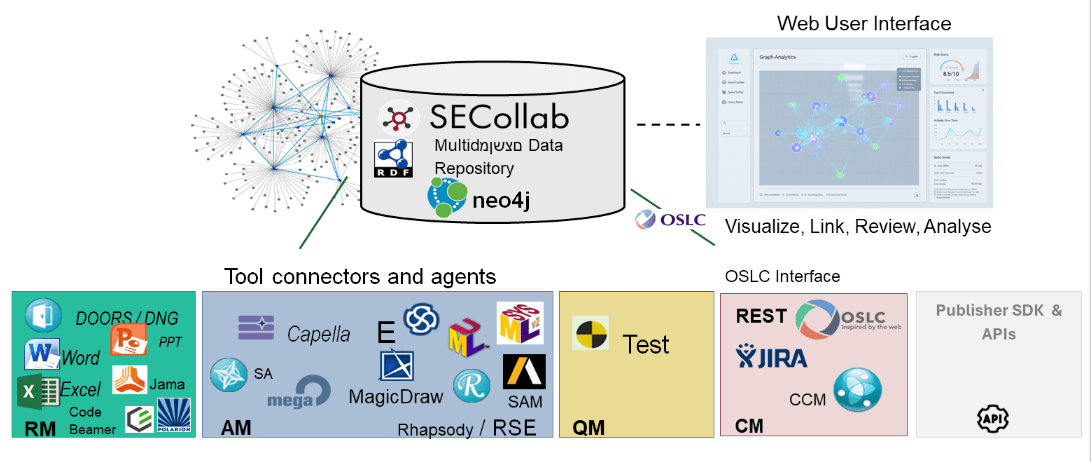
Fig. 1 – Architectural overview of the SECollab Platform
1. Sharing and aggregating data, documents, and models
SECollab indexes data from various tools across disciplines and the lifecycle to support visualization, linking, reviewing, analysis, and reporting of engineering data. For server-based tools, SECollab deploys agents that continuously index changes in the authoritative source of truth (ASOT). It also provides publishers for offline tools, including office documents and MBSE clients, and can leverage OSLC-enabled tools.
To represent data across multiple domains and disciplines, SECollab uses RDF ontologies, with data stored as RDF graphs. It adopts OSLC standard vocabularies for domains such as requirements, change management, and test management, and supports modeling domains such as UML and SysML. By relying on RDF and a graph-based repository, SECollab can accommodate multiple discipline-specific domain models.
2. Enabling end-to-end traceability through Data Linking
SECollab provides both a centralized link management system and an OSLC-based linking capability. This allows users to create and manage links between indexed objects from any connected data source, either within the SECollab repository or across external OSLC providers. For example, an indexed MagicDraw model can be linked to Jira issues using SECollab's OSLC capability and the SodiusWillert OSLC connector, OSLC Connect for Jira.

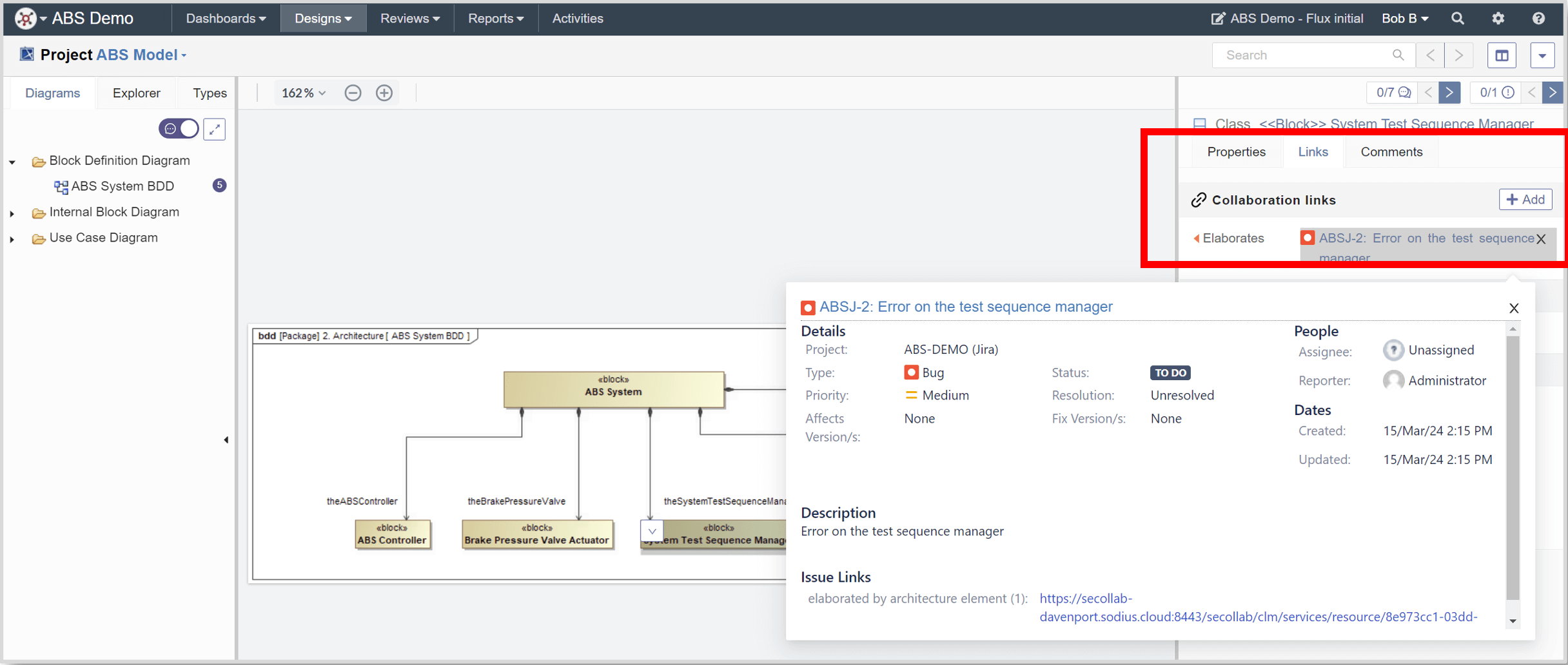
Fig. 2 – An example of OSLC-based traceability between a MagicDraw model and a Jira issue
To scale end-to-end traceability beyond individual links, SECollab introduces semantic mechanisms to structure cross-disciplinary linking ontologies and traceability viewpoints:
➡️ Specifying cross-disciplinary linking ontology
With SECollab linking, the entire set of artifacts from all disciplines forms a unified engineering graph. To manage and constrain such a complex traceability network, SECollab supports the definition of a business ontology (see Fig.3), a customizable semantic layer that controls how the various links are created and interpreted across domains.
This ontology classifies domain-specific artifacts using user-defined types and specifies the allowed link types between them. For example, requirements can be classified as “system requirements", stakeholder requirements”, while modeling artifacts can be specified as “systems” or “functions”.
Link types such as "allocatedTo" can then be used to relate a “system requirement” to a “system” in the technical architecture. This approach ensures that traceability in SECollab carries semantic meaning rather than being just a collection of uninterpreted links.
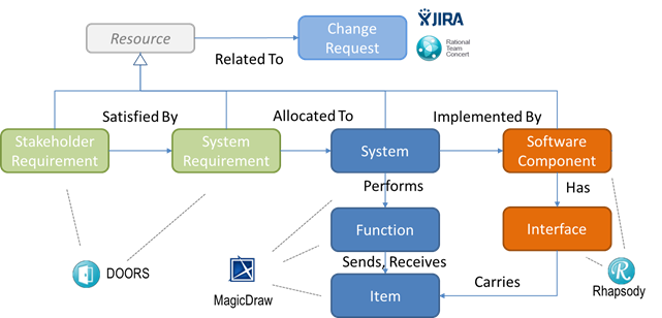
Fig. 3 – Cross-disciplinary Unified Ontology
➡️ Specifying traceability viewpoints
Traceability graphs can become complex, especially when the stakeholders are interested in different aspects of traceability. For this purpose, traceability viewpoints can be specified.
A SECollab traceability viewpoint (see Fig. 4) visualizes aspects of the Digital Thread fabric for a specific stakeholder. For example, a Verification and Validation Lead would be interested in tracking how system requirements are allocated to system components and verified by test cases.
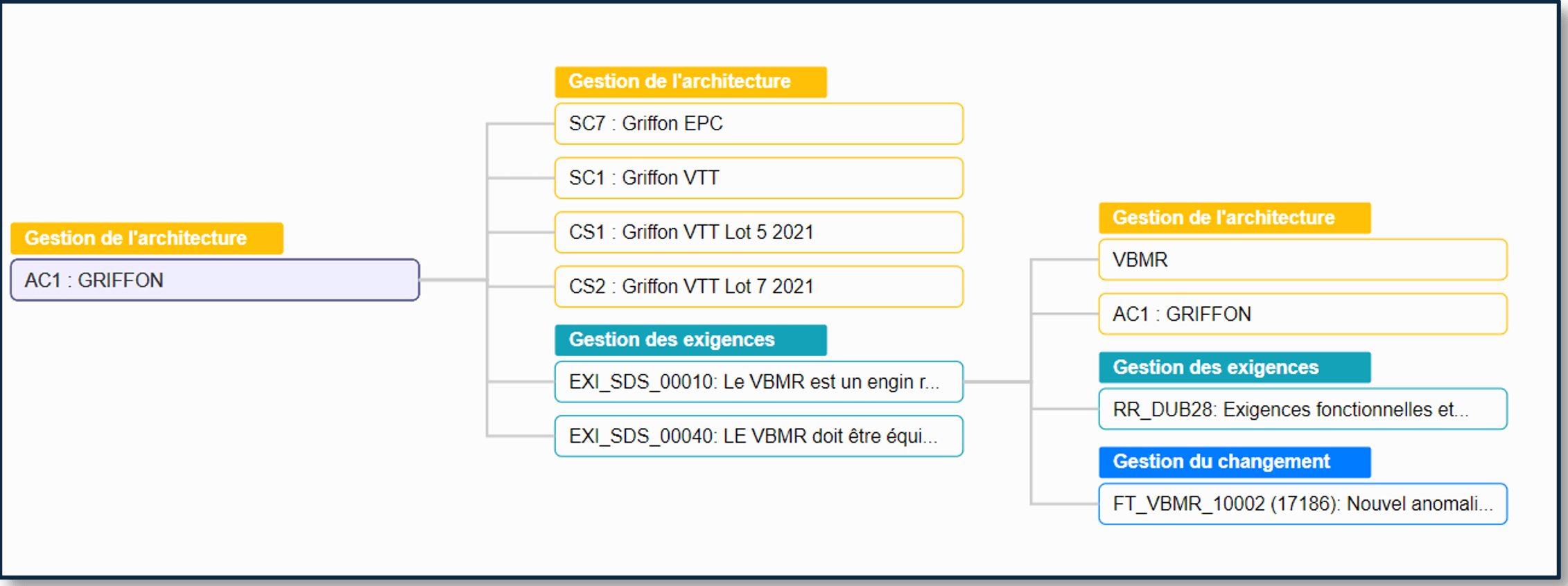
Fig. 4 – An example of a hierarchical traceability viewpoint in SECollab
3. Supporting global configurations
SECollab manages federated configurations across datasets within the Digital Thread. When establishing traceability links, conducting reviews, or generating reports, it is essential to specify the exact configuration (or baseline) of the involved datasets. For instance, when linking a DOORS requirement to an MBSE model, the specific configuration of both the requirements dataset and the model must be defined. This level of specificity is also necessary when managing traceability with an OSLC provider like IBM ELM, referring to an ELM global configuration.
Fig. 5 – An example of a global configuration across multiple MBSE datasets in SECollab
SECollab manages global configurations across project datasets, thereby ensuring that reviews, reports, and traceability are performed within the appropriate configuration context.
This approach prevents erratic behavior and inconsistencies that can arise when configuration contexts are not properly managed. SECollab also provides a model comparison feature, enabling reviewers to investigate changes in recent model updates, which is crucial for conducting thorough reviews.
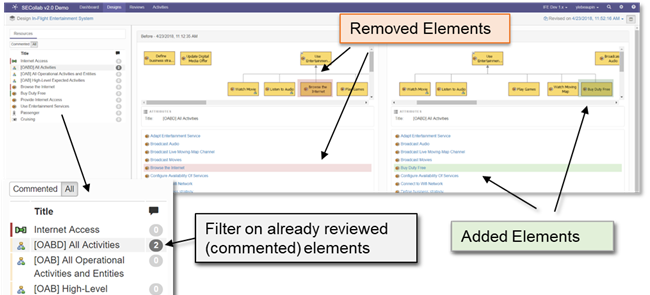
Fig. 6 – Version-aware model comparison in a review context
4. Cross-Disciplinary Review
A key challenge in multidisciplinary projects is the ability to conduct digital reviews when new requirements or use cases are introduced into the design. Such changes impact a broad set of cross-disciplinary artifacts, spanning both systems engineering and discipline-specific designs.
To address these challenges, SECollab provides integrated mechanisms for review orchestration, in-context collaboration, and progress monitoring across disciplines.
➡️ Review management
Digital reviews need to be managed and orchestrated to ensure clarity around reviewer roles, assigned artifacts, and review outcomes. Each reviewer needs to know which elements are expected to be reviewed, according to their domain of expertise and project role. SECollab supports this through a dedicated review workflow. In addition, it enables reviewers to create finding records in organizational tracking systems such as Atlassian Jira via its OSLC integration.
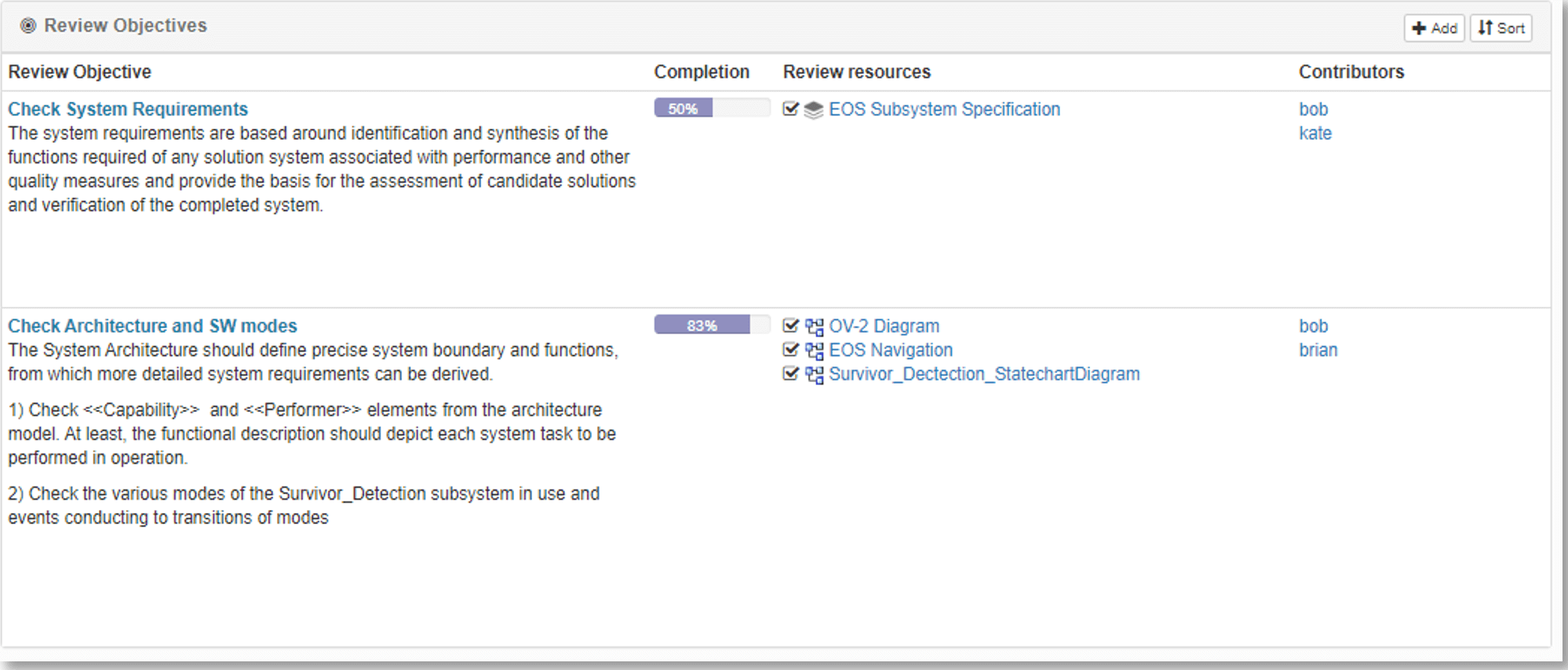
Fig. 7 – Review Management Workflow in SECollab
➡️ Review commenting and markups
SECollab enables reviewers not only to visualize published artifacts from across disciplines but also to add in-context comments and graphical markups. For example, MBSE diagrams can be visualized and annotated directly within the review environment. This capability offers an effective way for both reviewers and project engineers to point out, discuss, and track cross-disciplinary findings in context.
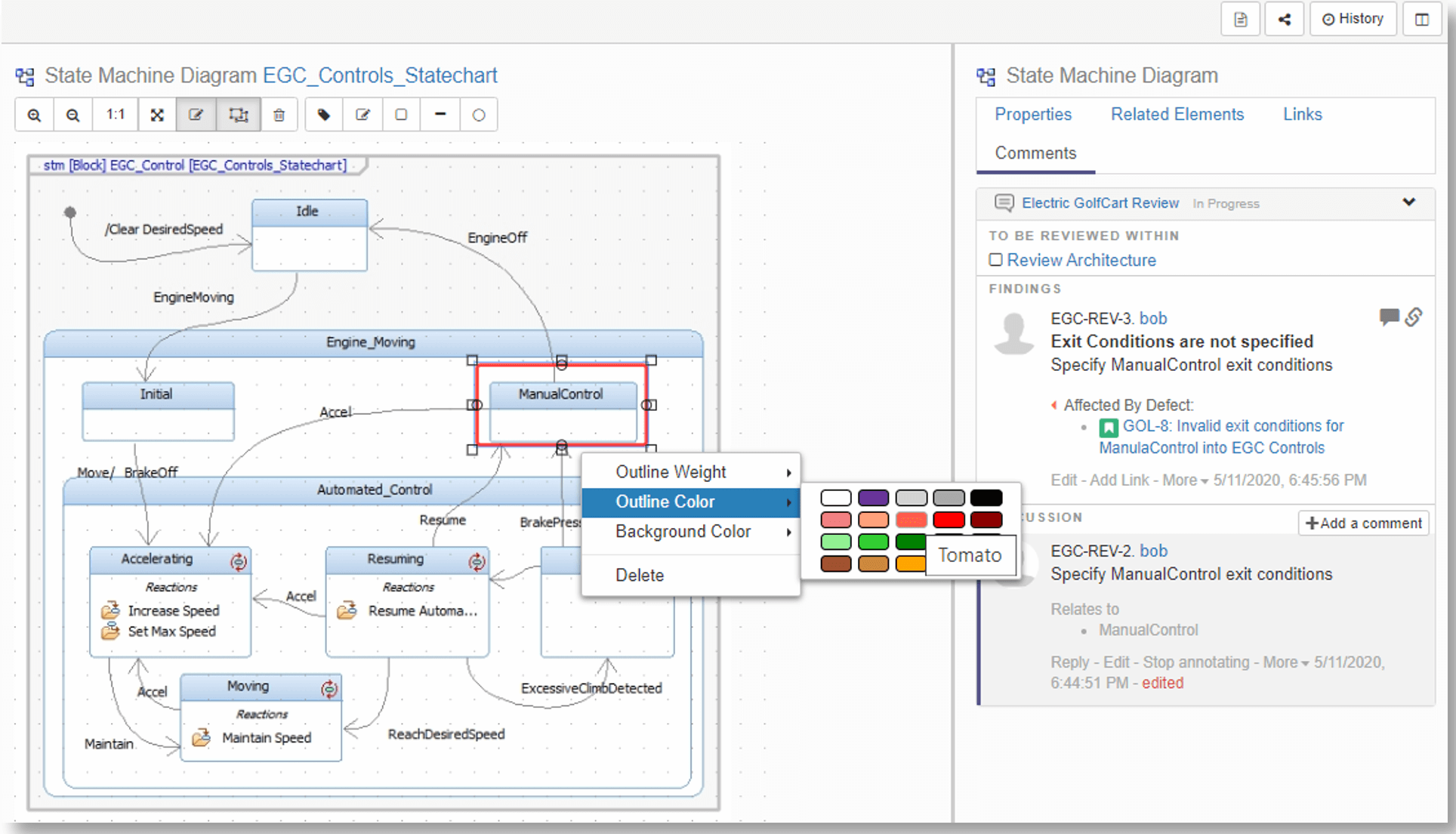
Fig. 8 – In-Context Commenting and Graphical Annotations on an MBSE Model During Review
➡️ Progress and completeness tracking
SECollab also supports the tracking of review progress, analysis, and readiness thanks to dedicated dashboards. These dashboards can be scoped to individual reviewers or the entire project context, enabling both detailed and accurate analytics through graphical visualizations.
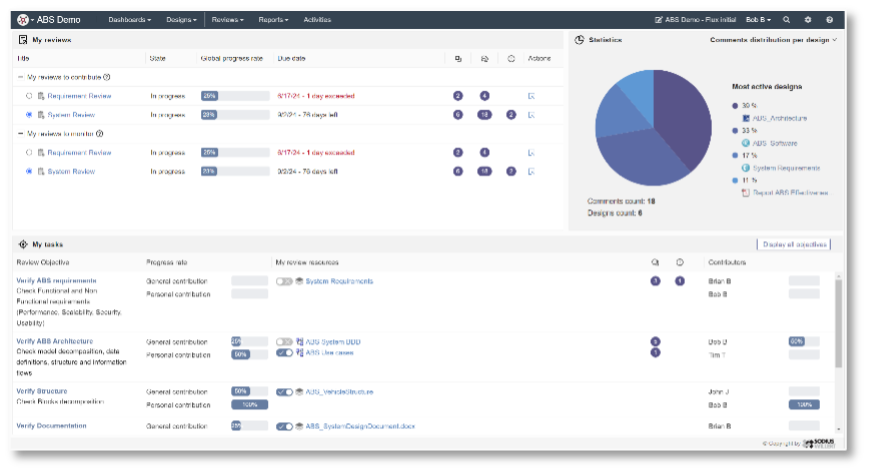
Fig.9 – Review progress dashboards in SECollab
5. Monitor compliance using real-time reporting
An important aspect of Digital Engineering is the ability to orchestrate cross-disciplinary digital viewpoints. INCOSE established this concept through its Digital Viewpoint Model (DVM).
The idea of digital viewpoints is to support specific stakeholders with the relevant data to perform their tasks. For example, a safety engineer must be able to access safety requirements and their related safety analysis models within their dedicated tools. Through its reporting capabilities, SECollab enables the creation of such digital viewpoints.
Powered by its graph database, SECollab reporting uses queries across its unified multidisciplinary ontology. These queries can be specified using a “self-serve” graphical user interface, without requiring any coding. Query results can then be visualized using tabular views and graphical widgets to highlight various KPIs.
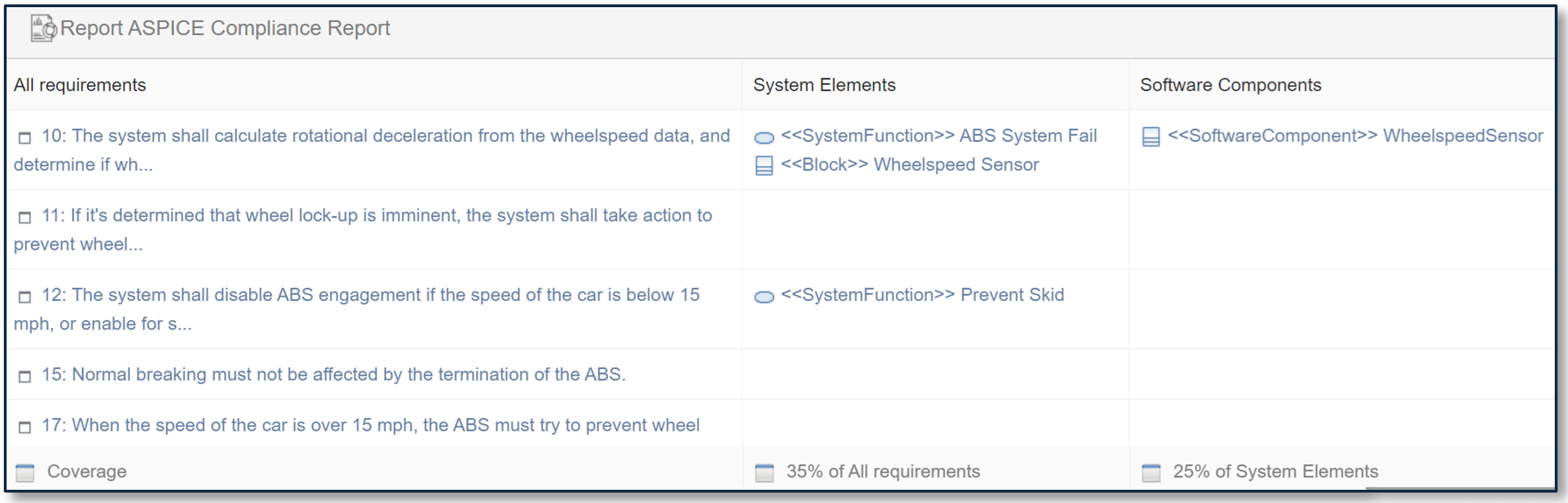
Fig.10 – Cross-disciplinary traceability visualization generated by SECollab
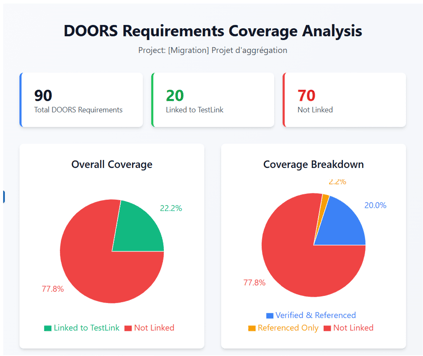
Forward-looking: Leverage AI to better understand your dataA cross-disciplinary Digital Thread can be complex, especially when working with a large, unified ontology. While SECollab already enables the creation of digital views and queries, this typically requires a solid understanding of the underlying ontology and tool capabilities. Recent advances in artificial intelligence, together with the implementation of Model Control Protocol (MCP) servers considerably simplify the analysis of complex cross-disciplinary data. Through simple natural language prompts, SECollab's AI integration can perform compliance and completeness analyses without requiring deep technical expertise. Below is an example of an AI query and its response based on SECollab data and the MCP server. The large language model (LLM used for this example is Anthropic Claude: Prompt: What can you say about the relationships between DOORS and TestLink resources in the project "[Migration] Projet d'aggrégation"? Response given by Anthropic Claude:
The above response demonstrates how the AI is capable of interpreting the complex project data graph, extracting the necessary information, and producing a relevant view based on the stakeholder prompt. |
CONCLUSION
Multidisciplinary engineering places increasing pressure on organizations to maintain robustness, consistency, and compliance while sustaining a delivery pace. Addressing these challenges requires more than ad hoc integrations between individual tools and isolated collaboration practices. Instead, it calls for a structural approach capable of reconnecting engineering data and practices across disciplines.
SECollab by SodiusWillert provides a Digital Thread foundation through a platform that supports cross-disciplinary practices and enhances collaboration. This digital backbone enables engineering teams to overcome these challenges, fostering the consistency and collaboration necessary for scalable digital engineering.
Based on my experience across complex engineering domains and toolchains, I am convinced that this approach represents a turning point in how systems are built and maintained, following the digital engineering vision.


Leave us your comment