
Model-to-Model Transformation in IBM Rhapsody

Automate the transformation of IBM Rhapsody models across domains and abstractions such as UML, SysML, AUTOSAR, MARTE, MODAF, or any custom profile. Define mapping rulesets once, execute them repeatedly, and eliminate the manual work that slows your engineering teams down.

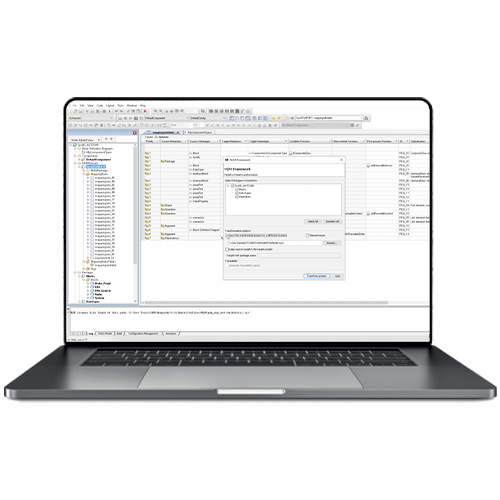
M2M Rhapsody Framework_monitor_SodiusWillert
PRODUCT OVERVIEW

What is M2M Transformation for IBM Rhapsody?

The M2M Transformation for Rhapsody is a purpose-built plugin for IBM Rhapsody that lets engineering teams design, execute, and reuse model-to-model transformation rules entirely within the Rhapsody modeling environment. No external scripting or code generation frameworks needed. It acts as a Model Transformation Language (MTL) that is itself a model, bringing full traceability, version control, and reuse to the transformation lifecycle.

Modeling-icon-SodiusWillert-100x100px-color
100% Model-Based Approach

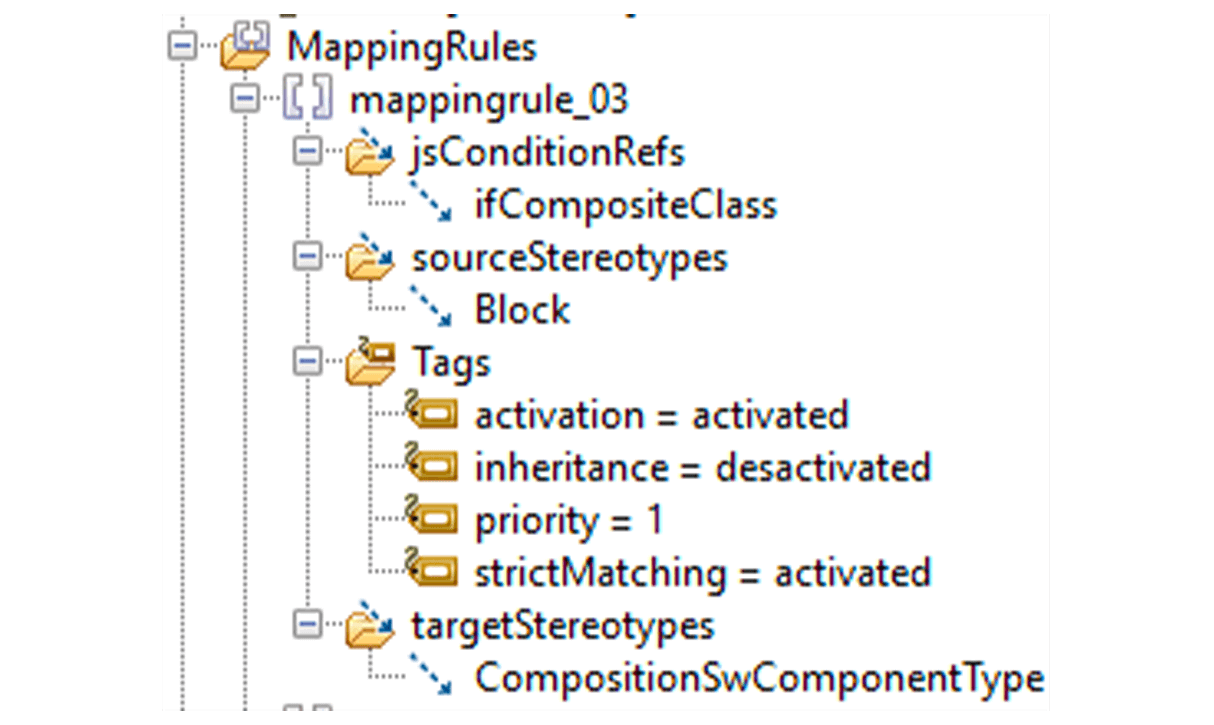
Transformation rules (i.e. called MappingRules) are modeled directly in IBM Rhapsody using the M2M Profile. There is no external DSL or separate toolchain: your transformation logic lives inside the same model, is subject to the same change management, and is readable by the whole engineering team.

Process-icon-SodiusWillert-100x100px-color
Cross-Domain & Cross-Abstraction Linking

Bridge any two modeling domains such as UML/SysML to AUTOSAR, MODAF to MARTE, or any pair of custom profiles. The M2M engine maps metaclasses and stereotypes between source and target domains with configurable inheritance and override logic, making it suitable for heterogeneous model ecosystems in aerospace, defense, and automotive.

Real-time-icon-SodiusWillert-100x100px-color
Iterative & Incremental Transformation

M2M supports iterative workflows: run a transformation, evolve the source model, and re-run — merging the result with the previous output. Rulesets can be packaged as standard Rhapsody Units, inherited, extended, or overridden, giving teams a reusable library of transformation patterns across programs and product lines.

KEY CAPABILITIES

M2M Transformation for Rhapsody Features

Whether you are deriving an AUTOSAR software architecture from a SysML system design, translating a MODAF operational model into an implementation view, or synchronizing two parallel modeling environments, M2M gives you the control and automation you need.

Model-based and customizable model transformation

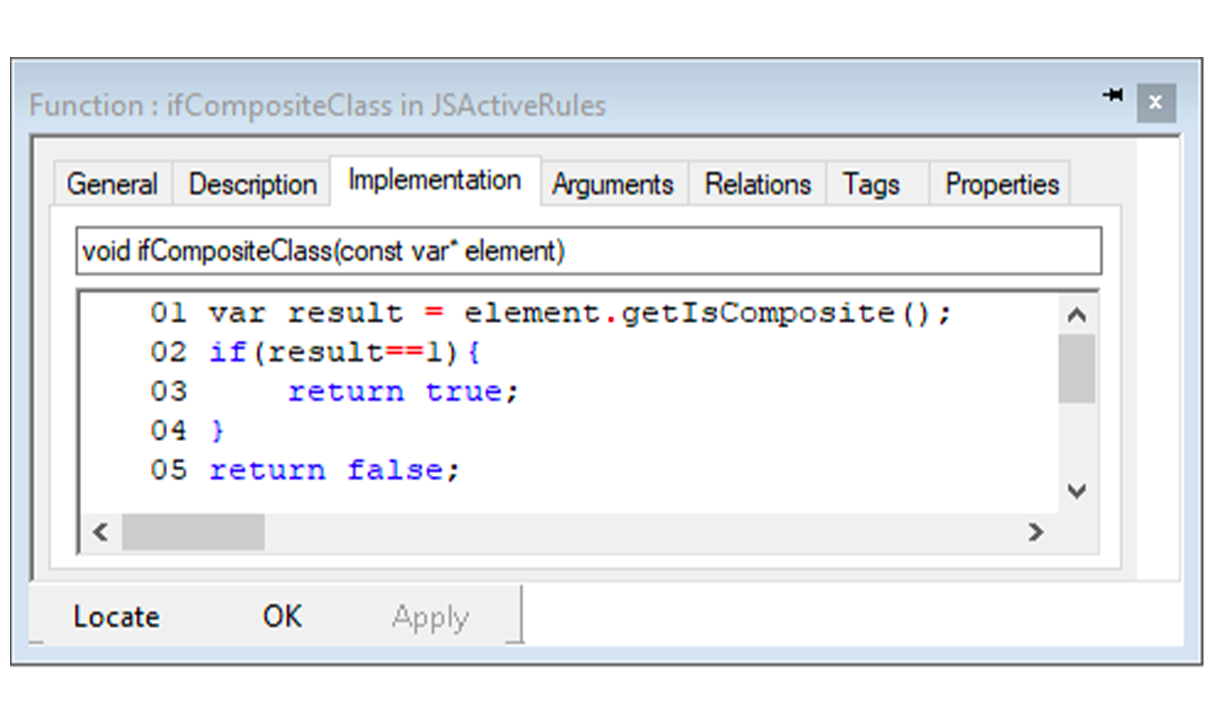
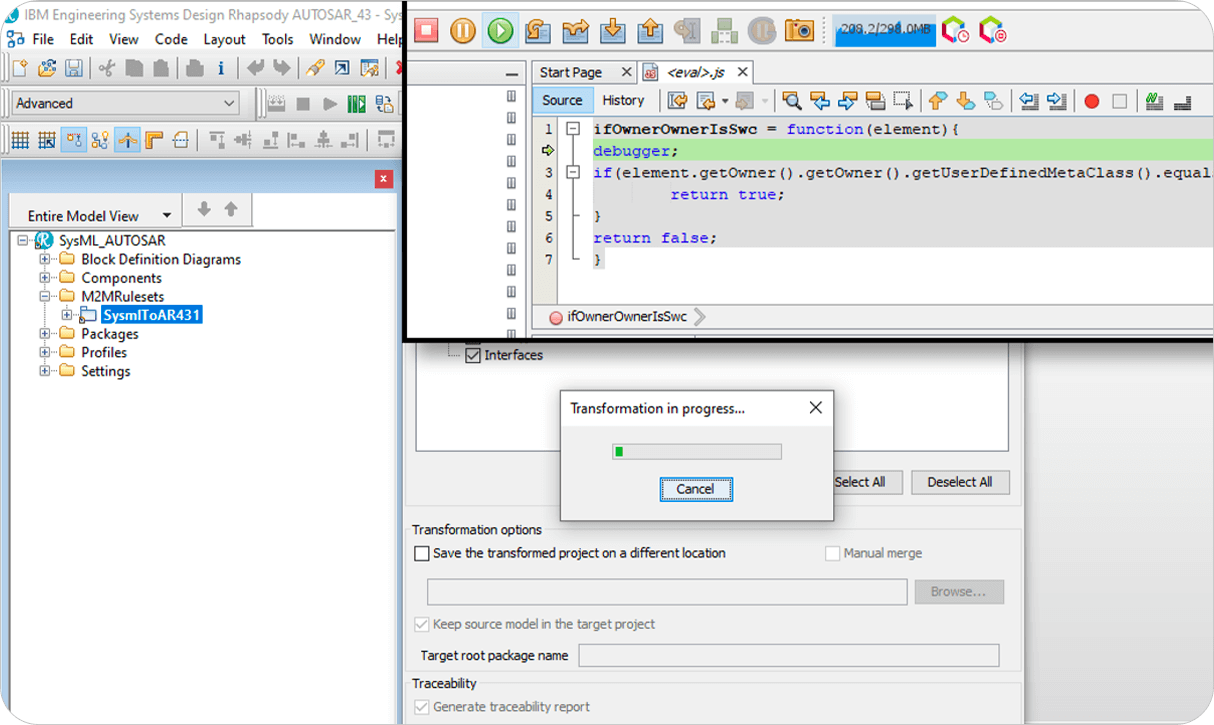
Achieve more complex transformations by extending your MappingRules with the simplified Rhapsody API. The MappingRules can be customized by implementing IBM Rhapsody API requests in JavaScript in the model. These API requests are executed at runtime during the transformation.

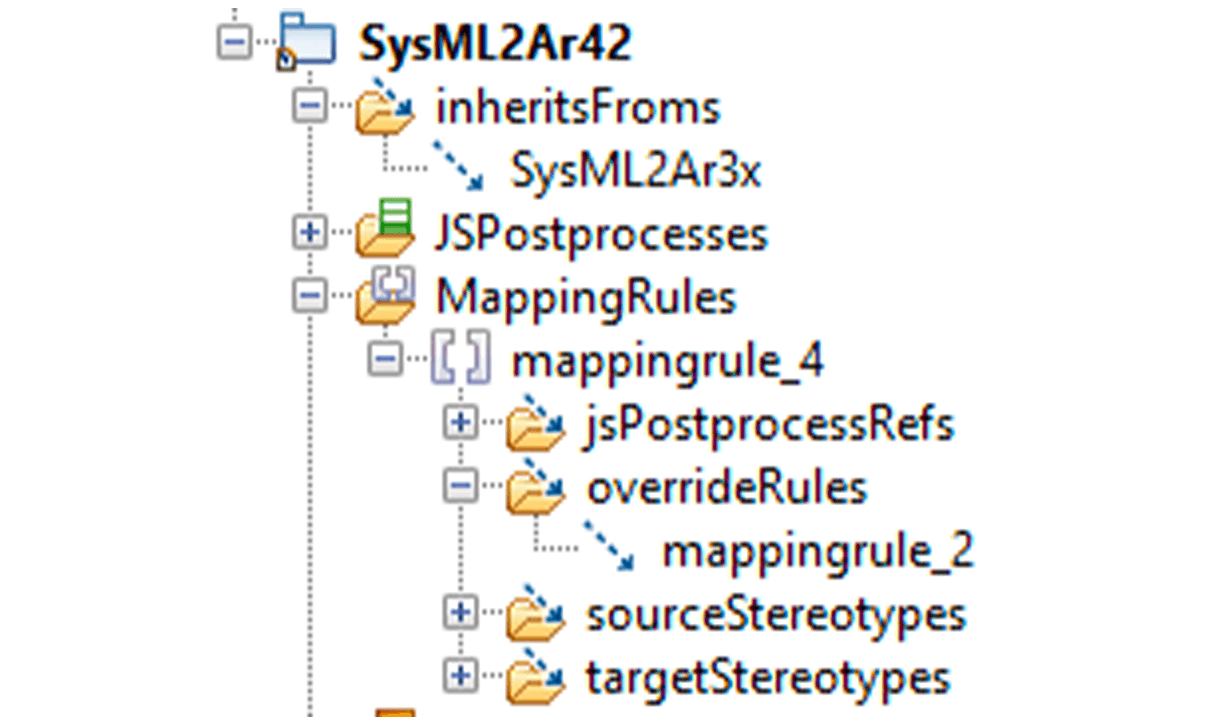
Fully customizable M2M Rulesets and MappingRules

Customize MappingRules to change the behavior of the execution of the rules. MappingRules can be ordered, enabled or disabled, and the inheritance of Stereotype can take into account at runtime. The execution of the rules are fully flexible.

Model-based traceability

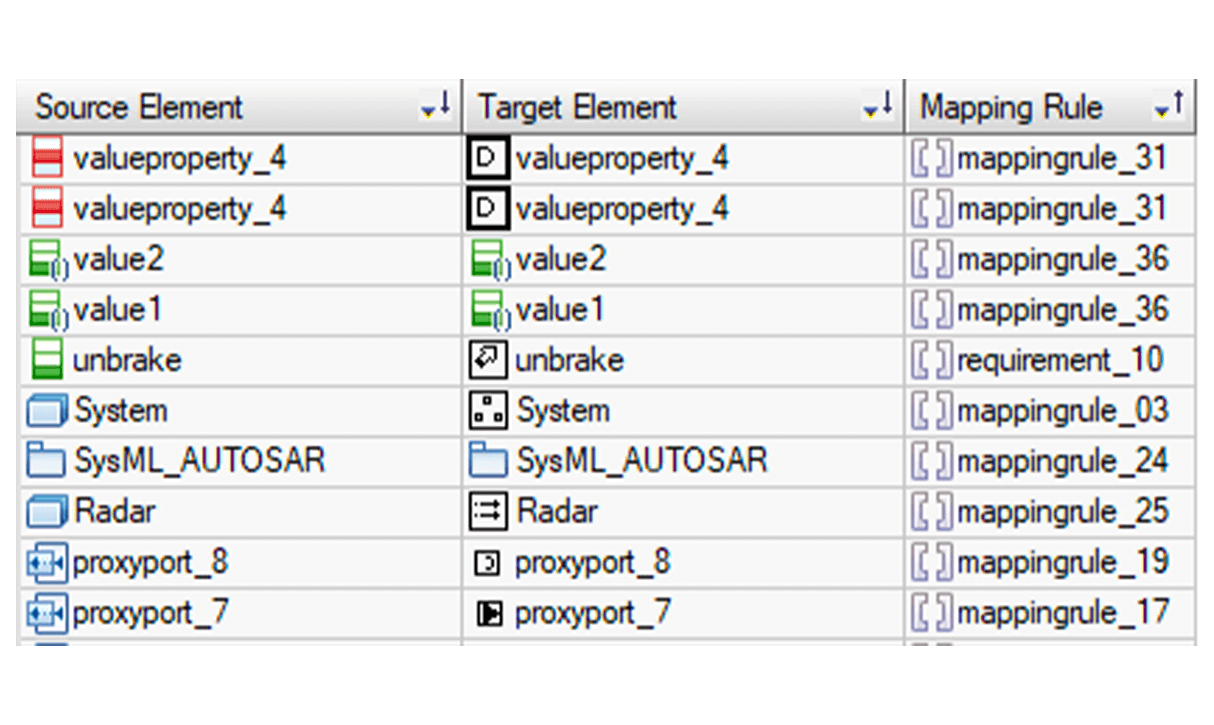
When enabled, the traceability mode generates a Rhapsody table to display the source element, the corresponding target element, and the MappingRule used to have this result.

Supports continuous integration

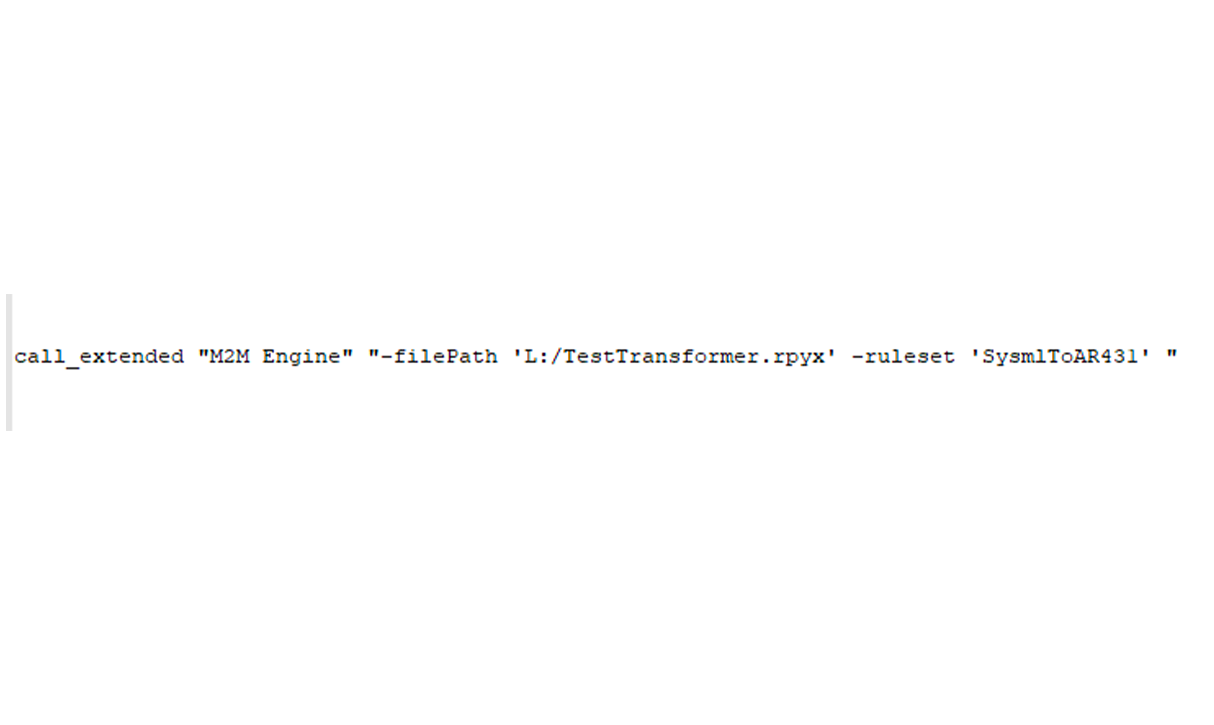
Model transformation with the M2M can be launched in batch mode by command-line. Streamline your processes by integrating the M2M transformations in your continuous integration system.

Re-use and extend rules

The M2M Ruleset can be re-used as a standard Rhapsody Unit and can inherit from another M2M Ruleset to extend or override them.

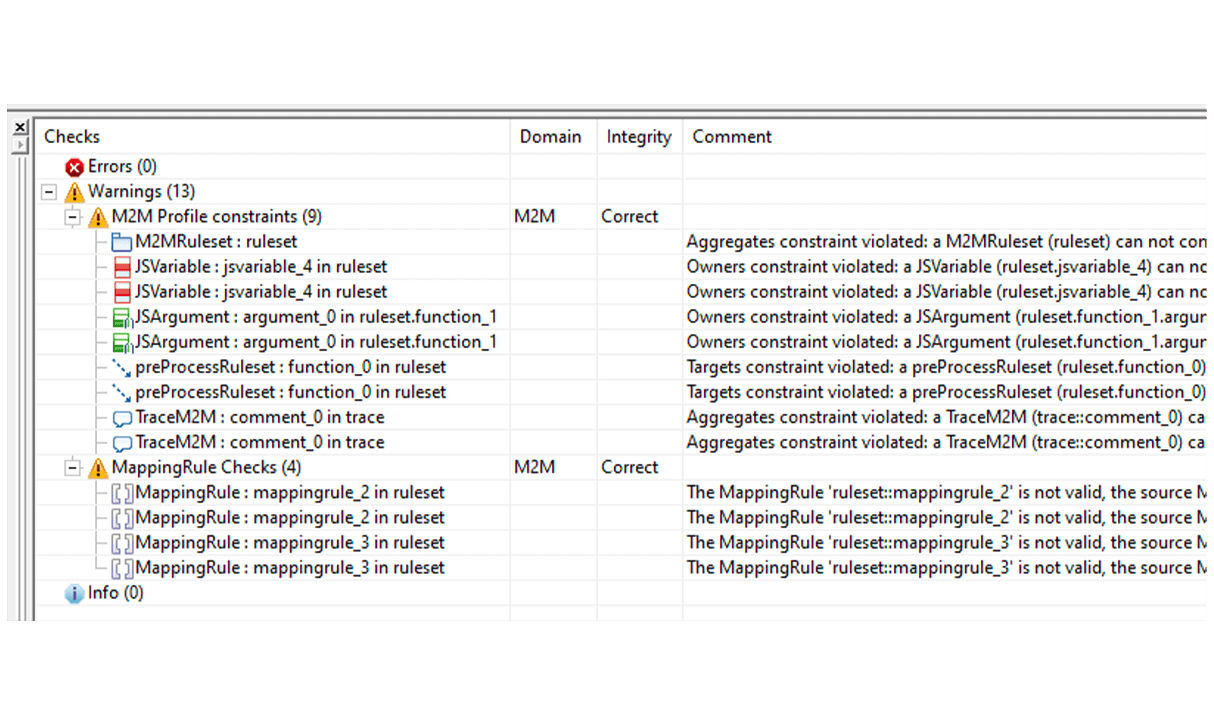
M2M Ruleset checker

The M2M profile embeds an M2M Ruleset model checker which will guide you in the correctness of the rules.

Debug MappingRules extensions

The MappingRules extensions written in JavaScript in the IBM Rhapsody model can be debugged by remote with NetBeans IDE.

HOW IT WORKS

From Mapping Rules to Transformed Models in Three Steps

Design Your Ruleset

Open the M2M Profile in IBM Rhapsody and model your transformation as an M2MRuleset. Add MappingRules that map metaclasses and stereotypes from the source domain (e.g., SysML Block) to the target domain (e.g., AUTOSAR SoftwareComponent). Use the Table view for a structured overview of all rules. Extend rules with JavaScript conditions or API calls where complex logic is needed. The Ruleset checker validates your rules before execution.

Execute the Transformation

Launch the M2M Engine from within the Rhapsody IDE or via command-line for batch execution. The engine traverses the source model, applies MappingRules in priority order, and produces target model elements in the destination Rhapsody project or package. Enable traceability mode to capture a complete audit trail of which rule transformed which element. Output can be merged with an existing model for incremental updates.

Reuse, Extend, and Iterate

Package your Ruleset as a standard Rhapsody Unit and share it across projects. Extend or override rules from a parent Ruleset without modifying it to preserve engineering knowledge across teams and product lines. As source models evolve, re-run the same Ruleset to synchronize the target model. Integrate the transformation into your CI system to keep downstream artifacts consistent automatically.

BENEFITS

Why Engineering Teams Choose M2M Transformation for Rhapsody

Check mark_color_59x59px
Eliminate Manual Model Rework

Every hour spent manually re-creating or re-aligning model elements across domains is an hour taken from design and validation. M2M lets you define the mapping once and execute it on demand, freeing your most experienced engineers from repetitive tasks and directing their attention to higher-value engineering decisions.

Check mark_color_59x59px
Reduce Human Errors in Cross-Domain Handoffs

Manual copying of model data across domains introduces subtle inconsistencies that are hard to detect and expensive to correct. Automated rule-based transformation applies the same logic to every element, every time, eliminating the variability that comes from human interpretation of mapping conventions.

Check mark_color_59x59px
Full Traceability for Compliance and Certification

In safety-critical industries such as aerospace, defense, and automotive, demonstrating the relationship between system models and implementation artifacts is non-negotiable. M2M's built-in traceability tables provide a model-level audit trail. It allows linking every transformed element back to its source and the rule that produced it.

Check mark_color_59x59px
Accelerate Multi-Domain Model-Based Engineering

Teams working with SysML at the system level and AUTOSAR or MARTE at the implementation level no longer need separate, manually maintained models for each domain. M2M automates the derivation of lower-level models from higher-level ones, enabling a continuous model-based engineering thread from concept to code.

Check mark_color_59x59px
Protect and Reuse Transformation Knowledge

Mapping conventions between modeling domains represent significant intellectual capital. By encoding these conventions as versioned, model-based Rulesets in Rhapsody, teams preserve this knowledge in a format that is auditable, shareable, and executable, rather than locked in individual expertise or informal documents.

Check mark_color_59x59px
Works Natively Inside IBM Rhapsody

There is no additional tool to install, no external transformation engine to maintain, and no context switching. M2M runs as a Rhapsody plugin, meaning engineers operate entirely within their familiar modeling environment.

RESOURCES

Learn More About M2M Transformation for Rhapsody

FREQUENTLY ASKED QUESTIONS

Common questions we receive about M2M Transformation for IBM Rhapsody

What exactly is model-to-model transformation, and what does M2M for Rhapsody enable?

Model-to-model (M2M) transformation is the automated process of deriving or translating one model from another according to a defined set of mapping rules. In practice, this allows an engineering team to automatically generate an AUTOSAR software architecture from a SysML system design, or derive an implementation view from an operational MODAF model without manual re-entry across tools. M2M Transformation for Rhapsody implements this entirely inside IBM Rhapsody, meaning the rules themselves are models, subject to version control and reuse alongside the engineering models they act upon.

Which modeling profiles and domains are supported?

M2M Transformation for Rhapsody supports any two profiles that can be expressed in IBM Rhapsody. This includes UML, SysML, AUTOSAR, MODAF, MARTE, and other IBM Rhapsody-compatible profiles. Because the transformation framework is generic and profile-agnostic, it can also be configured to work with any custom profile developed by your organization. The M2M Importer/Exporter variant additionally supports transformations between Rhapsody and EMF-based external metamodels.

Do I need programming skills to use M2M Transformation for Rhapsody?

Not for standard use cases. The core of the product is fully model-based: you design your MappingRules in the Rhapsody Table view by selecting source and target metaclasses and stereotypes. There is no coding required. For more complex transformations that need conditional logic or dynamic element manipulation, rules can be extended with JavaScript using a simplified Rhapsody API. This extension layer is optional and designed for power users or developers integrating M2M into a larger engineering pipeline.

How does M2M Transformation for Rhapsody fit into a CI/CD or automated build pipeline?

The M2M engine supports command-line batch execution, allowing transformations to be triggered as part of any CI system (Jenkins, GitLab CI, Azure DevOps, etc.) or automated build process. This means every time a source model is updated and committed, the corresponding target model artifacts can be automatically regenerated to keep multi-domain model consistency without requiring manual intervention from engineers.

What license types are available, and is a floating/network license option offered?

M2M Transformation for Rhapsody is available under node-locked and floating (network) license models to accommodate different team sizes and deployment scenarios. Floating licenses allow a pool of seats to be shared across a team, reducing cost per user for organizations where not all engineers use the tool concurrently. Please contact our sales team for current pricing, volume discounts, and license configuration options tailored to your organization.

Can I evaluate M2M Transformation for Rhapsody before purchasing?

Yes. SodiusWillert offers a free evaluation license for M2M Transformation for Rhapsody. You can request a trial directly by contacting our team. The trial gives you full access to the product features so you can validate the tool against your own models and transformation use cases before committing to a license. Our experts can also provide a guided evaluation session to accelerate your proof-of-concept.

What IBM Rhapsody versions are compatible with M2M Transformation?

M2M Transformation for Rhapsody is updated regularly to maintain compatibility with current IBM Engineering Systems Design Rhapsody releases. Supported version details and compatibility matrices are documented in the product Release Notes, available at help.sodius.cloud/help/nav/12.

If you are on a specific Rhapsody version and have compatibility questions, please reach out to our support team before purchasing.

Ready to Automate Your Model-to-Model Transformations?

Whether you are evaluating the tool for a new program, need a license for an existing team, or want expert guidance on designing your first Ruleset, our team is ready to help.

Fichier 1 1 1
RELATED PRODUCTS

The SodiusWillert IBM Rhapsody ecosystem

Whether you're migrating models, extending Rhapsody's capabilities, or training your team, SodiusWillert provides the complete solution stack for IBM Rhapsody environments in regulated industries.