
















For German language blog
SECollab is a web-based platform that aggregates engineering data from across your toolchain into a single, version-controlled environment for cross-domain traceability, structured review, and compliance reporting.

SECollab brings requirements, models, tests, and documents from your entire toolchain into a single web platform, so regulated engineering teams can run formal reviews and generate audit-ready traceability without forcing everyone onto one tool.
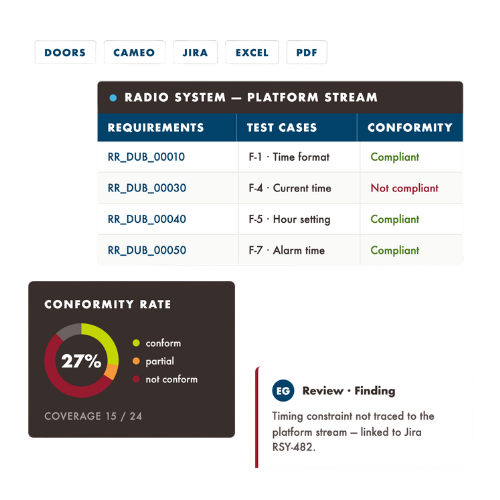
SECollab (Systems Engineering Collaboration) is a tool-agnostic, OSLC-native platform that aggregates engineering data and documents from across your toolchain into a single web environment. It preserves each tool's authoritative source of truth while enabling cross-domain traceability, structured formal reviews, compliance reporting, and configuration management, all from one access point.
SECollab supports both formal OSLC-native integrations and pragmatic publication-based aggregation, so legacy desktop tools and file-based formats (Word, Excel, PowerPoint, PDF) participate in the same digital thread as OSLC-enabled requirements, modeling, and change-management tools.
/Traceability-icon-SodiusWillert-color-100x100px.png)
Link requirements, architecture, tests, and change records into one connected view, with native version, source, and validity data preserved on every artifact.
/risk-management-sodiuswillert.png)
Bring reviewers, suppliers, and customers into one review, no matter which tool produced the artifact, and without every guest needing a full license.
/compliance-sodiuswillert.png)
Export real-time traceability and compliance reports in PDF, Excel, Word, or HTML, built from live data, not a manual audit scramble.
SECollab covers the full lifecycle of a formal engineering review, from first import to final compliance report.
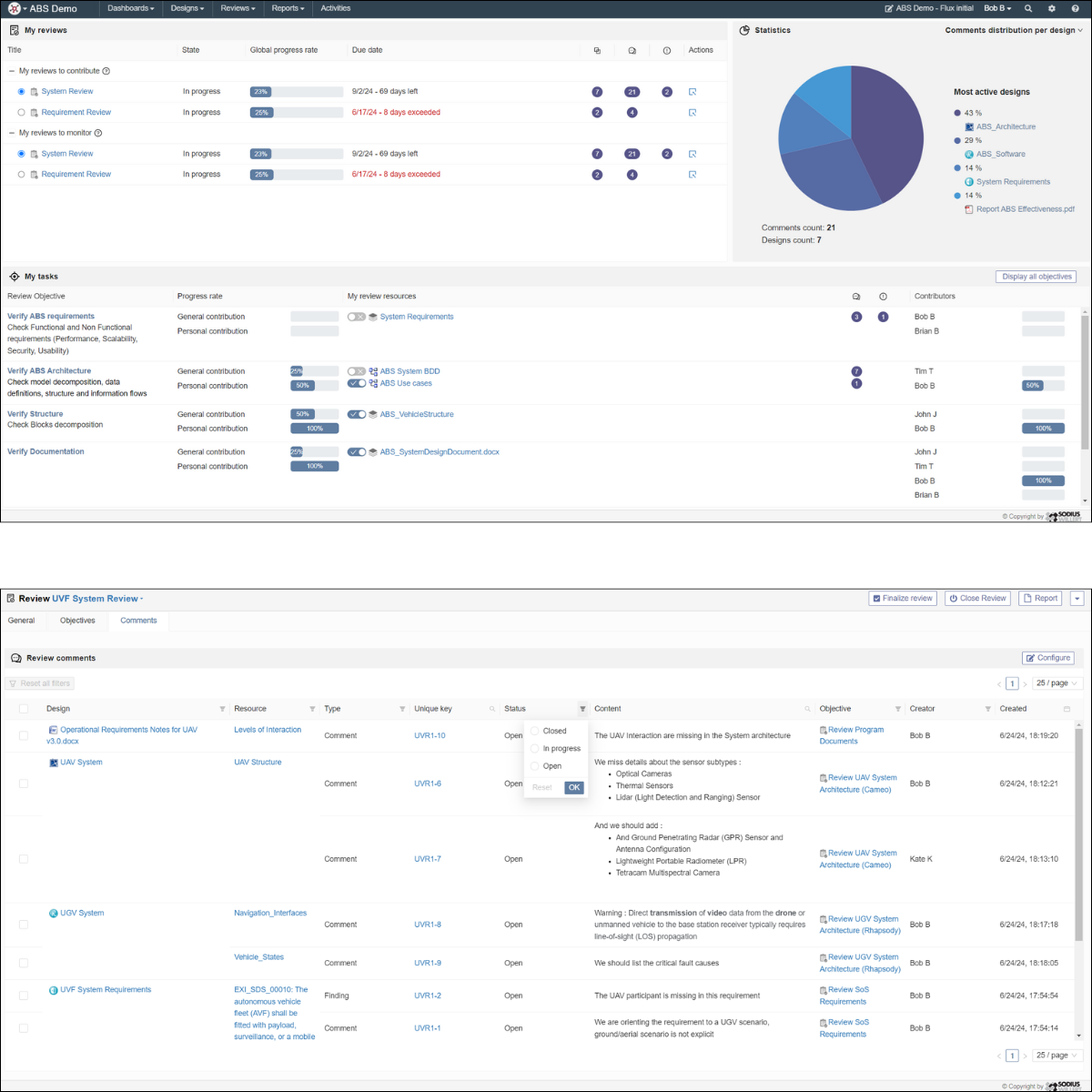
Coordinating formal requirements reviews across DOORS, DOORS Next, Word, and Excel content usually means chasing comments across disconnected tools and email threads.
SECollab centralizes review scope, objectives, and reading paths in one place, so reviewers annotate requirements directly in context and moderators track findings through a single dashboard, internally or with external partners and customers.
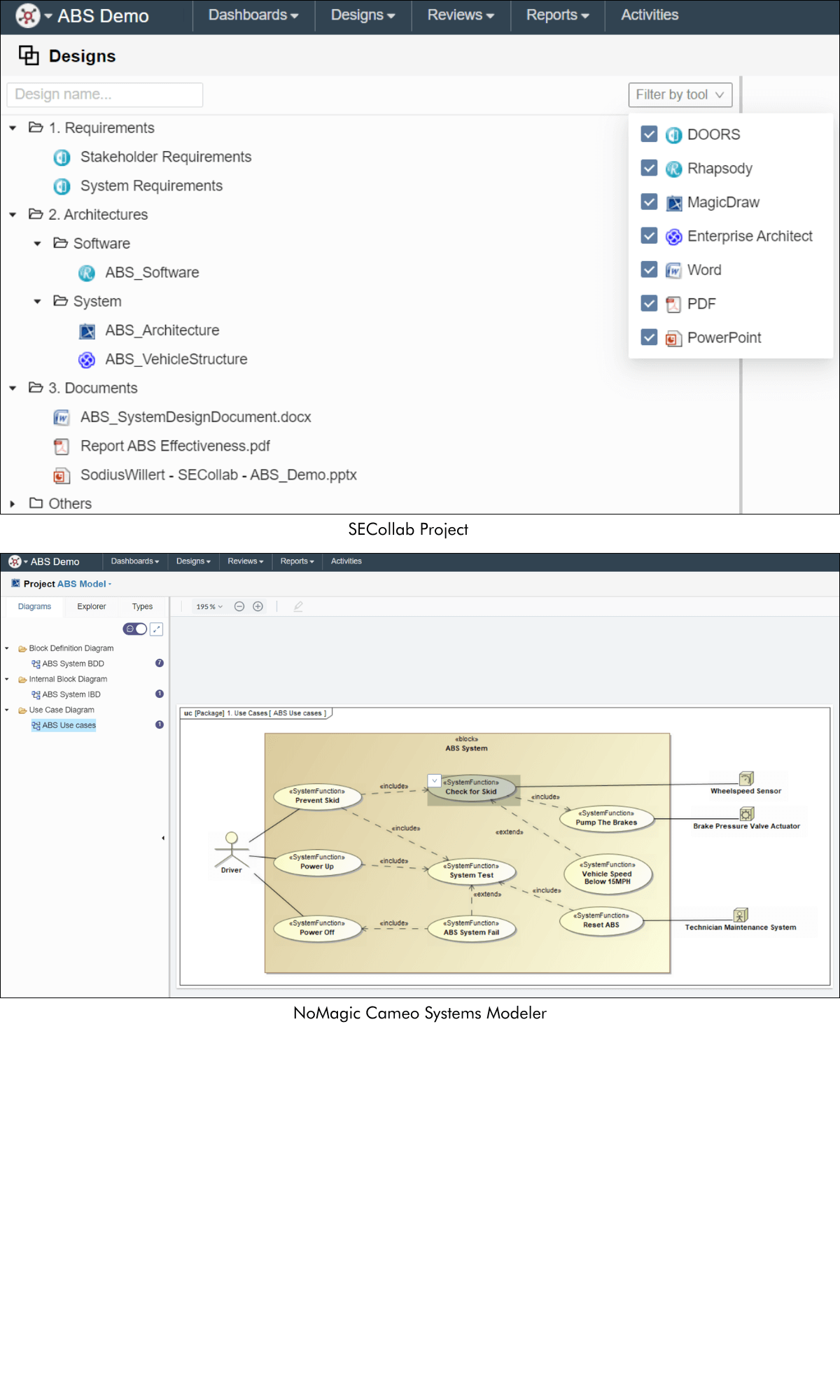
Getting stakeholders who aren't modelers to meaningfully review a large MagicDraw, Rhapsody, or Capella model is a persistent bottleneck.
SECollab lets review managers define a guided reading path through the model (e.g. diagrams, packages, and elements in a specified order) with instructions and objectives attached, so contributors review exactly what matters without needing to browse the native tool or understand its package hierarchy.
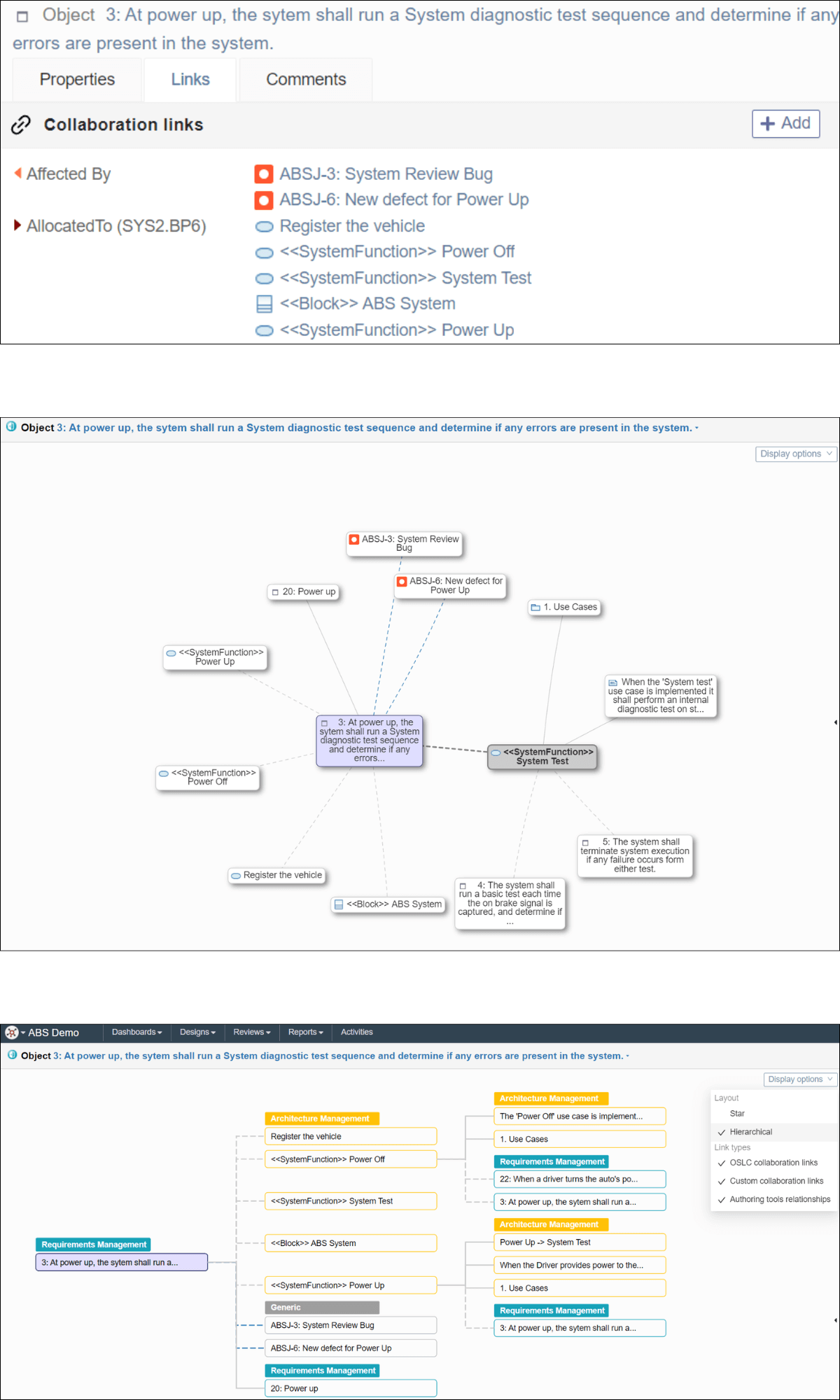
Multidisciplinary programs generate parallel questions: is the hardware baseline consistent with the software baseline? Has a requirement change propagated to every affected artifact?
SECollab links requirements, architecture, tests, and change items across tools into shared digital viewpoints, and configuration management (conforming to OSLC GC) keeps every team working from a consistent, version-aware picture, enabling joint engineering assessments instead of siloed ones.
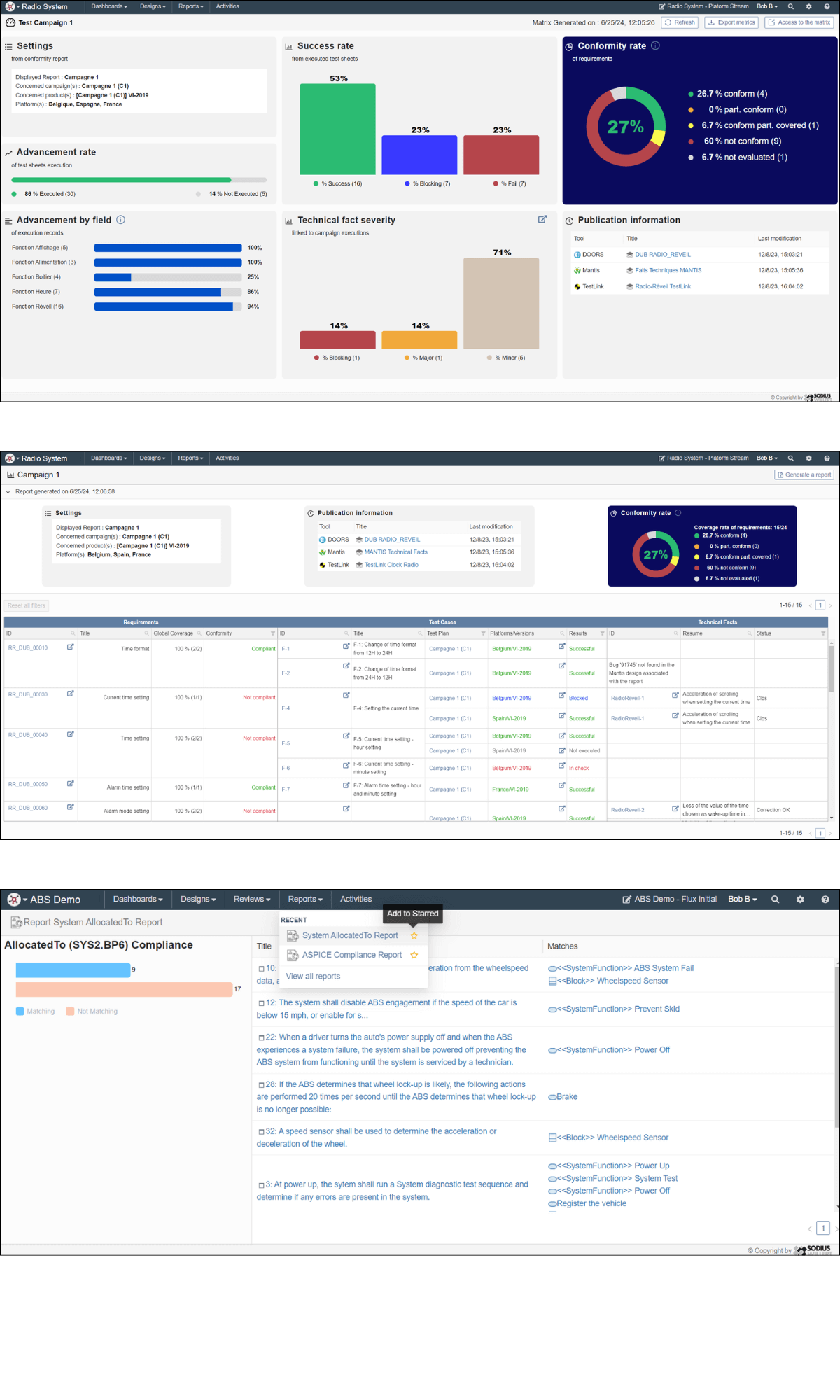
Proving compliance with standards like DO-178C, ISO 26262, or Automotive SPICE means demonstrating test coverage against every requirement, on demand and with evidence.
SECollab's no-code report engine queries the linked data graph in real time to generate coverage matrices, compliance reports, and audit-ready documentation published to Word, PDF, Excel, or HTML, always reflecting the current state of the program, not a snapshot that's already gone stale.
SECollab operates as a neutral aggregation layer that sits above your existing toolchain. Engineering data stays authored in its native tool; SECollab collects, links, and governs it centrally so cross-domain traceability, review, and reporting happen in one place.

SECollab collects engineering data and documents directly from your existing tools (e.g. IBM DOORS, Rhapsody, MagicDraw/Cameo, Capella, Sparx EA, Jira, Polarion, Word, Excel, PDF, and more) without requiring migration or replacement.
Data is ingested via OSLC TRS feeds, server-side agents, or the SECollab Publisher client, while native ASOT traceability is preserved so every artifact stays linked back to its source of record.

Once aggregated, artifacts are connected across domains through an interactive graph explorer, even for tools that were never designed to talk to each other.
Version and baseline management conforms to OSLC GC, so teams work from a consistent configuration. Structured, multi-stakeholder reviews can then be run directly on this connected data, with defined objectives, reading paths, and dashboards to track progress, internally or with external partners.

SECollab's no-code template engine, backed by a Neo4j graph database, turns your connected data into real-time traceability reports, compliance matrices, and coverage dashboards published to Word, PDF, Excel, or HTML.
Because reports are generated live from linked data, they always reflect the current state of your program, giving you audit-ready evidence on demand.
SECollab is built on open, vendor-neutral standards rather than a proprietary data model, which is what makes tool-agnostic collaboration possible in the first place.
Published resources are stored as RDF triples in a Neo4j graph database, mapped to standard OSLC domains (RM v3, AM v2.4, QM v1, CM), with custom types and properties preserved alongside standard ones.
Conforms to OSLC Configuration Management standards (e.g; components, streams, baselines, and global configurations) so SECollab fits naturally into an existing GC strategy rather than introducing a new one.
OSLC RM, AM, QM, and CM; OSLC Global Configuration; and RDF/Linked Data throughout.
Custom domain connectors via SDK, dynamic ontologies, and query-based custom types let SECollab reach data formats outside the standard OSLC domains.
SECollab meets your data where it lives. It supports both formal OSLC-native integrations and pragmatic publication-based aggregation for legacy desktop tools and file formats.
Don't see your tool? SECollab's open APIs and documented Java SDK let developers build custom integrations. Get in touch to discuss the specifics.
/Customer%20logos%20210x79px%20-%20PNG/ibm-customers-sodiuswillert.png?width=210&height=79&name=ibm-customers-sodiuswillert.png)









Talk to our team about how SECollab fits into your review process, your toolchain, and your compliance requirements.